Global Fintech Institute at Digital:NEXAsia (D:NEXA) 2025
Digital:NEXAsia (D:NEXA) 2025 brought together some of the most influential voices in technology, policy, and financial innovation. This year’s lineup featured leaders shaping the global AI landscape, including:
🎙️ Mr Heng Swee Keat – Chairman, National Research Foundation; Director, GIC Board
🎙️ Mr Mati Staniszewski – Co-Founder, ElevenLabs (AI Decacorn)
🎙️ Mr Tim Shi – Co-Founder, Cresta AI (AI Decacorn)
🎙️ Mr Justin Liu – Co-Founder, Gensparks (AI Unicorn)
🎙️ Mr Kelvin Chan – Senior Research Scientist, Google DeepMind
🤖 Founders from leading AI unicorns such as Genspark, Cresta, WIZ.AI, and Tomoro AI
With global AI innovators gathered in Singapore, this year’s discussions focused on real-world adoption, trustworthy governance, and the future of digital confidence.
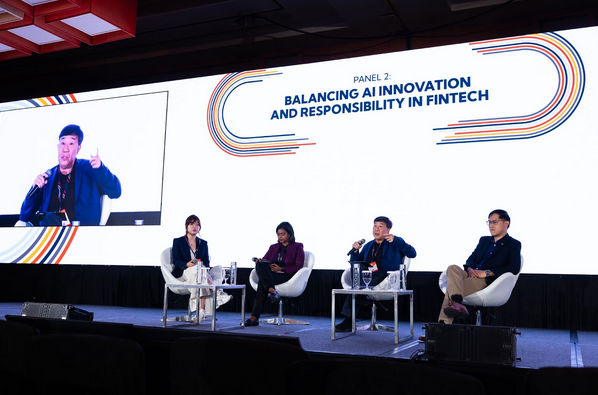
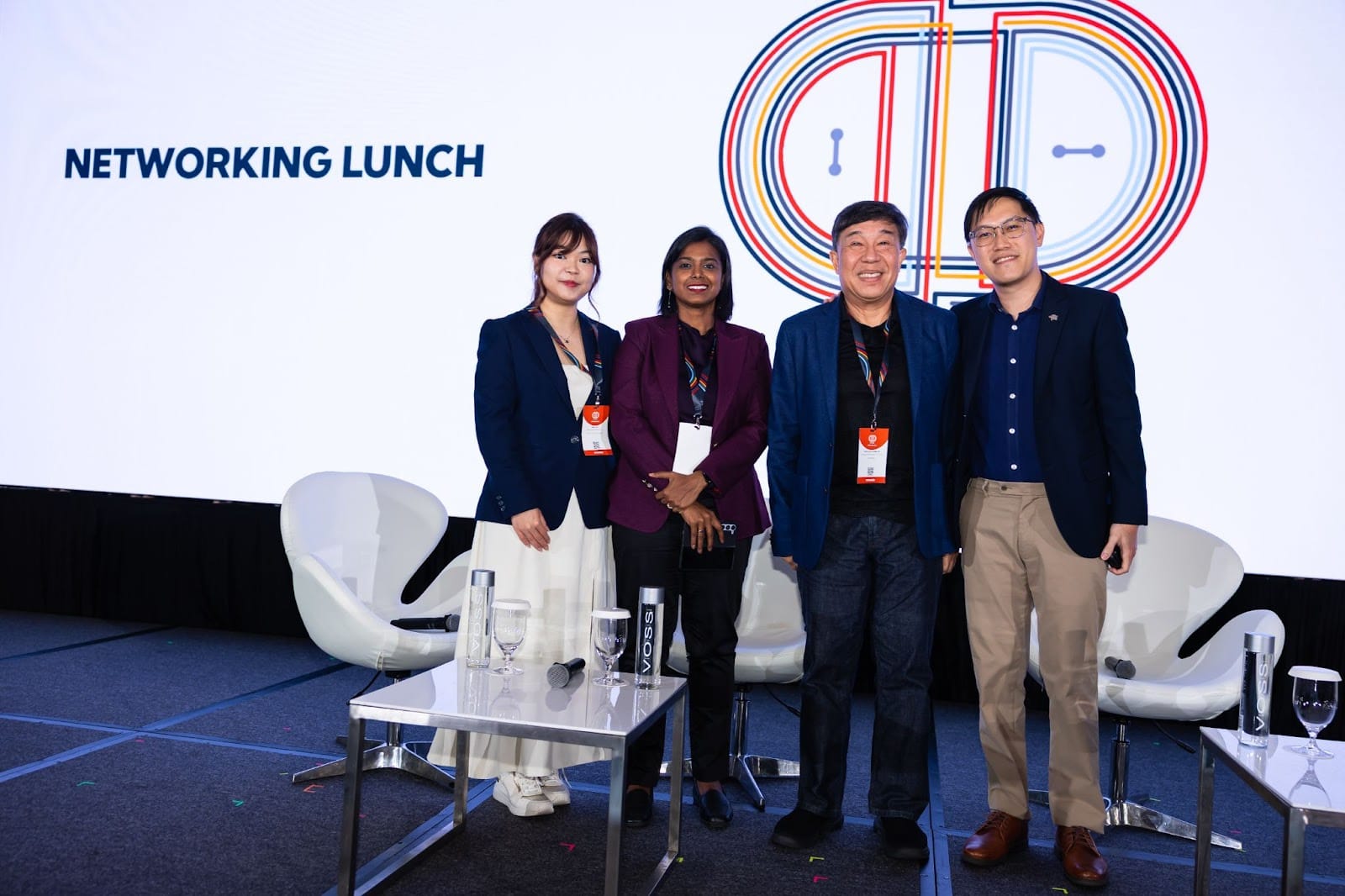
Amid this distinguished programme, the Global Fintech Institute (GFI) led a focused dialogue on how financial institutions can accelerate AI innovation while strengthening accountability. Moderated by Ho Hui Yi, Chief Strategy Officer at GFI, the panel moved beyond theory to address the practical realities of building responsible AI infrastructure at scale.
Panelists:
- Prof David LEE Kuo Chuen 李国权 CFtP® – Chairman, GFI
- Dr Brindha Jeyaraman – Group Head of AI Governance, UOB
- Ian Low Jian Liang – Head of AI Lab Programme, Prudential plc
Key Insights & Themes from the Panel
1. Defining Responsible AI: Trust by Design
Panellists agreed that responsible AI is no longer optional but a fundamental requirement for innovation.
- Trust by Design: It was emphasized that responsible AI involves building trust through design rather than the current approach of "building faster and fixing later." Trust principles must be integrated into the design phase to prevent systems from being brittle, misaligned, or biased.
- The Three Foundations: An AI system is a function of three core components: hardware, software (algorithm), and data. If any foundation is flawed, the outcome will reflect those flaws.
- Engineering for Humanity: Speakers argued that systems must be designed to reduce harm and create social stability. This concept was described as "peace in creation"—ensuring that the act of creating AI contributes to peace rather than destruction.
2. The Challenge of Inclusion and "Winner-Takes-All" Dynamics
- Economic Disparity: A major concern raised was that modern AI is structurally "winner-takes-all." It rewards scale, capital, and computing power, creating a zero-sum dynamic that can drain cash flow from the foundational level.
- Decentralization as a Counterweight: To prevent market failure where SMEs cannot participate, panelists advocated for distributed technologies (like Web3 and blockchain). These tools can enable distributed ownership and shared infrastructure, ensuring benefits flow to society rather than just capital owners.
- Positive Inclusion: True inclusion is not simply about access, which can lead to scams or digital addiction. Instead, "positive inclusion" requires privacy protection and data security, achieved through architectures where users own their data.
3. Scaling from Pilot to Production
- The POC Trap: It was noted that historically, up to 80% of projects remain in the Proof of Concept (POC) stage. To reach production, governance and ethical guardrails must be introduced at the very start of the innovation process.
- Standardized Testing: Because different markets have different data protection needs, centralized model testing is crucial.
- Human in the Loop: Despite the move toward autonomous agents, speakers insisted that humans must remain in the loop to verify decisions, particularly in finance where fairness metrics and accountability are critical.
4. Corporate Governance and Board Responsibility
- The Competency Gap: The discussion highlighted a potential "crisis of competency" in corporate governance. Boards must better understand the risks embedded in the hardware, software, and data they deploy.
- Degree of Delegation: A critical decision for leadership is determining the "degree of delegation" granted to AI agents—specifically, how much autonomy an AI should have to analyze data, allocate assets, or execute trades.
- Empowerment vs. Replacement: Governance should ensure AI is used to empower staff rather than replace them. This requires organizations to rethink KPIs and staff roles in an AI-augmented workplace.
5. Trust, Accuracy, and Explainability
- Explainability is Non-Negotiable: In financial services, explainability is a "must-have." Institutions utilize materiality assessments to classify systems as low, medium, or high risk.
- The "Better Than Human" Risk: Participants discussed the unique risk of creating technology that thinks and acts faster than humans. While AI might pass standardized tests (similar to medical board exams), it is not deterministic. Relying on it without understanding its decision-making process carries significant corporate risk.
6. The Future of Regulation
- Evidence-Based Compliance: The future of compliance is expected to shift from static policy checklists to "evidence-based compliance." This involves monitoring real-time metrics regarding bias, discrimination trends, and data lineage.
- Cross-Border Challenges: Regulators face difficulties because the digital economy is becoming borderless and virtual. Managing compliance across a multi-currency, distributed network is complex, and regulators often move slower than the pace of technological innovation.
GFI is honoured to have contributed to this year’s D:NEXA programme and remains committed to advancing responsible AI adoption across the global financial ecosystem.
Talent Certification
GFI’s core programmes, the Chartered Fintech Professional (CFtP®) and Chartered Fintech Associate (CFtA) certifications, equip professionals with the essential skills needed to navigate industry change and adapt to the rapidly evolving fintech landscape.
For collaboration enquiries or to explore CFtP® certification for your organization, please contact: [email protected], CC: [email protected]
CFtP Dec 2025 Cohort is now open. Register before 15 December: https://globalfintechinstitute.org/programs/cftp/